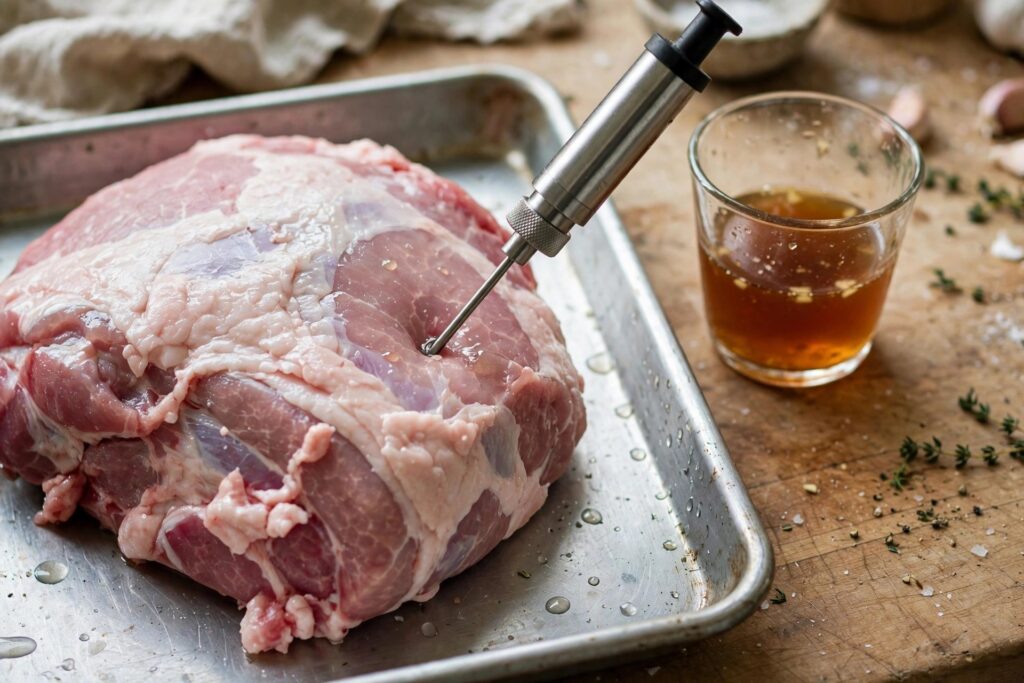
It looks like a science project: a big stainless syringe with a needle long enough to make you flinch. Watch a competition pitmaster work a pork butt with one of those things and you’d think the secret to great barbecue was medical equipment. It isn’t, exactly — but injecting is the closest thing to a legal shortcut in low-and-slow cooking, and most backyard cooks either never try it or try it once, make a mess, and give up. Here’s how to do it right, from why it works to the fine print nobody mentions.
First, Understand Why a Needle Beats a Soak
Marinades are honest work, but they’re shallow work. Soak a brisket overnight and the flavor penetrates a few millimeters — seasoning particles are simply too large to ride moisture deep into dense muscle, and diffusion is a slow, lazy traveler. The center of a fourteen-pound packer never finds out the marinade existed.
Injection skips the waiting line. It puts seasoned liquid directly between the muscle fibers, deep in the interior, where a rub can’t reach and a soak can’t travel. And that’s worth doing for three reasons, which are also the three things that go wrong on long cooks: flavor, tenderness, and moisture.
Flavor is the obvious one — salt, broth, spice, and smoke-seasoning delivered to the middle of the cut instead of sitting on the outside. Tenderness follows because dissolved salt helps muscle fibers hold onto water instead of squeezing it out as they contract in the heat. And moisture is the insurance policy: muscle is roughly three-quarters water, and a long smoke drives a lot of it out through evaporation. Even a modest amount of liquid parked inside the meat changes the final juiciness noticeably. Think of it as plumping the cut from the inside out before the fire ever touches it.
Second, Pick Cuts Worth the Needle
Not everything benefits. Injection earns its keep on big, dense cuts that spend hours in the smoker: whole packer briskets, pork butts and shoulders, whole turkeys and chickens. These are the cuts with enough mass to absorb the liquid and enough cook time to need the help. Lean cuts like pork loin, which dry out if you look at them wrong, are excellent candidates too — the added moisture is genuinely noticeable.
Skip thin cuts. Steaks, chops, and ribs are too shallow to hold an injection; the liquid just finds its way back out through the nearest surface, and you’ve made a mess for nothing. Those cuts are better served by a brine or a marinade. On a pork butt, work the whole thing but give some attention to the money muscle — the thick, cylindrical muscle opposite the blade bone — since that’s the piece judges and guests reach for first.
Third, Build a Liquid That Actually Flows
This is where competition cooks separate themselves, and it’s simpler than the trophy photos suggest. A good injection has a base, a flavor layer, and restraint. The base is thin by necessity — broth or stock, apple juice, water, melted butter kept warm enough to stay liquid. The flavor layer is dissolved salt and sugar, a little Worcestershire or soy, garlic and onion powder, maybe some of your dry rub whisked in until it fully dissolves.
Two classic templates to start from. For pork, the competition-style profile that made its name on the circuit: apple juice, water, white sugar, dry rub, and Worcestershire, warmed just enough to dissolve everything. For brisket, go more austere — beef broth with black pepper, a spoonful of sugar, and a pinch of your brisket rub. Brisket wants to taste like beef with the volume turned up, not like dessert.
Three rules govern all of it. Strain or blend anything with bits in it — chunky herbs and coarse garlic will clog the needle mid-plunge and ruin your rhythm. Taste the liquid before it goes in; it should taste slightly stronger than you want the finished meat, because it dilutes once it’s inside. And go easy on the sugar — sweet injections brown and then burn faster on the outside, and a scorched exterior is a high price for a sweet interior. As for volume, roughly half to three-quarters of a cup per pound is the working range; you can always add more, but you can’t take it back out.
Fourth, Work the Grid
Do this in a sheet pan or a roasting pan, because the first few times will be messy and there’s no prize for redecorating the kitchen. Load the injector — submerge the needle tip fully so you don’t draw air — and go in deep. The pattern that works is a grid: insertion points an inch or two apart across the whole cut, covering it evenly like you’re aerating a lawn.
Push the needle in at least halfway, then depress the plunger slowly as you withdraw, letting the liquid spread along the channel the needle just made. From a single hole you can angle the needle two or three different ways to widen the coverage without making new punctures. Some liquid will squirt back out — that’s normal, wipe it off or rub it into the surface as a binder for your dry rub, which goes on after injecting, not before.
Don’t inject frozen or half-thawed meat; the liquid won’t distribute and you’ll get pockets instead of coverage. And give the meat ten or fifteen minutes after injecting before it goes on the smoker, so the liquid settles instead of leaking straight back out onto the grate.
Fifth, Respect the Fine Print
Here’s the part the glossy tutorials skip: the needle is a one-way street for bacteria. It drags whatever was on the surface of the meat deep into the interior, which means injected meat plays by stricter food-safety rules than a plain roast. Inject cold meat, get it back in the refrigerator promptly if you’re not cooking immediately, and never let injected meat sit out at room temperature while you “let it come up to temp.” Cook it to a safe internal temperature all the way through, and keep the injector itself scrupulously clean — disassemble it, scrub every part in hot soapy water, rinse well, and let it air-dry completely.
Timing matters for texture too. You can inject right before the cook or several hours ahead — a few hours in the fridge gives the seasoning time to distribute, which is a genuine advantage on a whole brisket. But keep acidic marinades away from overnight rests. Vinegar and citrus keep working while you sleep, and by morning the texture can turn mushy in a way no amount of smoke will fix. When in doubt, shorter rest, simpler liquid.
And through all of it, the thermometer is doing the real quality control. Injected meat can cook a touch faster thanks to the added moisture, and sugar-heavy injections want a closer eye on the exterior, so check internal temps more often than you think you need to. A reliable thermometer is the whole game on long cooks — here’s how to pick one worth trusting.
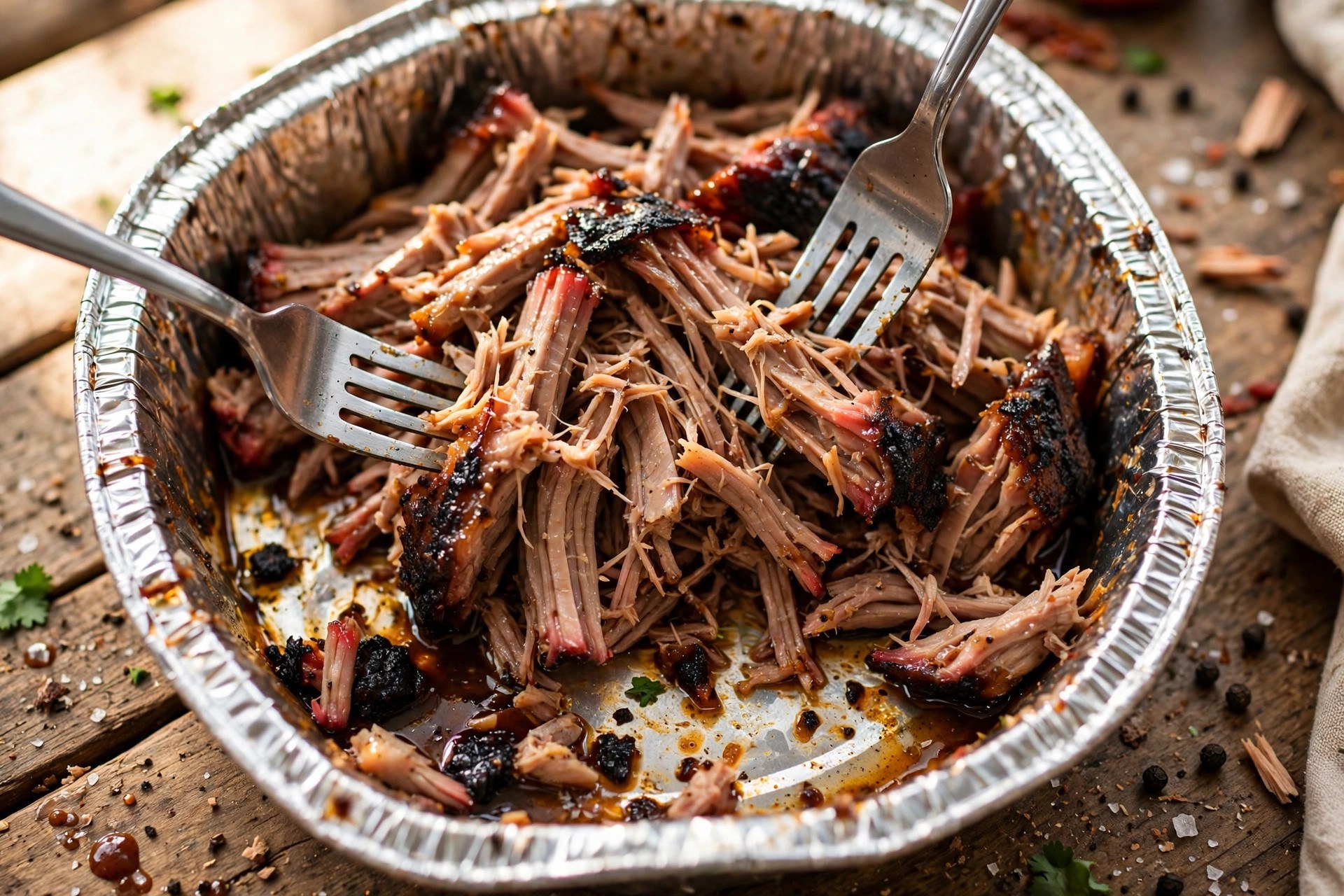
Five tips, one syringe, and a sheet pan’s worth of mess the first time — that’s the whole investment. Try it on your next pork butt: inject it the night before with something simple, smoke it exactly the way you always do, and pull it. The difference won’t be subtle. It’ll be the difference between good barbecue and the kind people ask you to make again.
Leave a Reply